Lexi’s Story: Growing Up as a Young Carer, Navigating Identity and Finding a New Purpose

When 21-year-old Lexi * looks back on her childhood, she describes herself as a “glass child” – a term often used to describe siblings of people with additional needs who are seen as the easy one, while their own needs go unnoticed.
For Lexi, caring wasn’t something she chose; it was simply part of everyday life.
As well as caring for her mother, she gradually took on caring responsibilities for her younger brother, older sister and younger sister. Alongside managing these responsibilities, Lexi was also navigating her own identity, education, health challenges and future ambitions.
Caring Was All I’d Ever Known
For as long as I can remember, I have cared for my mom, who has Postural Tachycardia Syndrome (PoTS) and Ehlers-Danlos Syndrome (EDS). These conditions cause chronic pain, fatigue, dizziness, joint problems and gastrointestinal issues.
My older sister also has PoTS and EDS, alongside mental health challenges. My younger sister has ADHD, and my younger brother has a rare medical condition.
From a young age, around the age of seven helping around the house became part of my daily routine. Over time, my responsibilities grew to include shopping, household tasks, emotional support and helping family members with day-to-day activities.
At the time, I didn’t think much about it. It was just normal life.
Realising I Was Different
As I got older, I began to realise that my childhood looked very different from those of my friends.
I often felt as though I was helping to raise everyone around me. While I loved my family and wanted to support them, I also felt that my own needs came second.
Secondary school was when I first noticed that other young people didn’t carry the same worries and responsibilities that I did. I found myself feeling jealous sometimes, wishing I didn’t have to think about so many things all the time.
Making friends and planning social activities could be difficult because family situations could change at any moment. It often felt isolating, and even when people tried to understand, it was hard to explain what life as a Young Carer was really like.
Finding People Who Understood
One of the most important sources of support for me was attending a Young Carers group run by Spurgeons.
It was there that I met one of my closest friends. Although we’ve since gone our separate ways, her friendship meant so much because, for the first time, I felt understood. I didn’t have to explain why my life looked different or why I carried so much responsibility.
Having that connection made me feel less alone.
The Difference One Teacher Can Make
School wasn’t always supportive. Often, staff didn’t really understand my situation or know how to help.
However, during Covid, my form tutor made a huge difference.
When lessons moved online, there were times when I needed to help my brother with schoolwork, household tasks or caring responsibilities. All I had to do was send her a message, and she would make arrangements without judgement or questions.
Looking back, that flexibility and understanding meant more than she probably realised.
Being Outed and Losing My Confidence
When I was 15, I was outed as gay at school.
I already felt uncomfortable because of attitudes and comments I had witnessed towards LGBTQ+ people, so the experience left me feeling frightened and exposed.
I was unable to face going into school and spent a week off sick. At home, I couldn’t tell my family the real reason because I believed they wouldn’t be supportive, so I pretended I was physically unwell.
It was an incredibly lonely time. I felt trapped between trying to protect myself and continuing to meet the expectations placed on me at home.
Balancing Caring and Education
Things improved somewhat when I moved into sixth form.
My friends were incredibly supportive and took the time to understand my circumstances. They made me feel seen and accepted.
Unfortunately, some teachers struggled to understand the realities of being a Young Carer. Even though they knew I was responsible for helping my brother get ready each morning, I was regularly challenged about being late and threatened with detentions.
It was frustrating to be punished for responsibilities that were outside of my control.
Following My Passion for Helping Others
Despite the challenges I faced, being a Young Carer helped me discover something important about myself.
I realised I genuinely enjoyed helping people and wanted a career where I could make a difference.
That passion led me to apply to study Paramedic Science at Birmingham City University, and I was thrilled to be accepted.
However, life took an unexpected turn.
Starting Again After Being Kicked Out
I had planned to continue living at home while studying, but after my family discovered I was gay, I was asked to leave.
The experience was devastating. It was quite heartbreaking to know that something so little and insignificant could cause the people who are supposed to love you (my mom) to ‘get rid of you.’
Not only was I suddenly dealing with the practical reality of finding somewhere to live, but I was also cut off from my young brother for several months.
At the same time, I was beginning to understand my own autism and ADHD diagnoses and trying to adjust to a completely different life.
For a long time, caring had been a huge part of my identity. Losing contact with my brother, alongside losing my home, left me feeling bereaved.
After a few months, I was allowed to see my brother again and soon it all started to seem normal again – however, I never did. I felt weird like I had to act differently around my mom because of my sexuality.
When My Own Health Became the Priority
Moving from a busy household where I was constantly caring for others to a quieter life left me feeling lost. For years, helping other people had given me purpose. Without that role, I experienced what felt like an identity crisis.
The pressure eventually took a toll on my mental health. While completing ambulance placements and university studies, I found myself struggling with anxiety and burnout. I needed medication and took a three-month leave of absence from university.
At the same time, my physical health began to deteriorate.
During my second year, I was diagnosed with several chronic health conditions, including PoTS, EDS, Endometriosis, Adenomyosis, IBS, chronic back pain, anxiety and depression. I am also currently being investigated for chronic fatigue syndrome (ME).
For the first time in my life, I had to accept that I needed support too.
Discovering a New Future
At the start of this academic year, I made the difficult decision to move away from the placement element of my course because my health no longer allowed me to continue.
Although it wasn’t the future I had imagined, I remained determined to find a new direction.
Today, my girlfriend supports me in the way I once supported others.
After a period of uncertainty, I have found a new passion: child safeguarding.
My ambition is to become a Designated Safeguarding Lead or work in a senior safeguarding role, helping to ensure children are protected, listened to and supported.
In many ways, the experiences that shaped my childhood have also shaped the person I am becoming.
My Message to Other Carers
If I could give one piece of advice to other carers, it would be this:
You are not different, you are not odd, you are not weird because of how your family dynamic is – every family looks different and you are playing your part as much as you can.
Let yourself rest.
For any LGBTQIA+ carers – you are loved, you are cherished, you are appreciated, you will find your people and I believe in you.
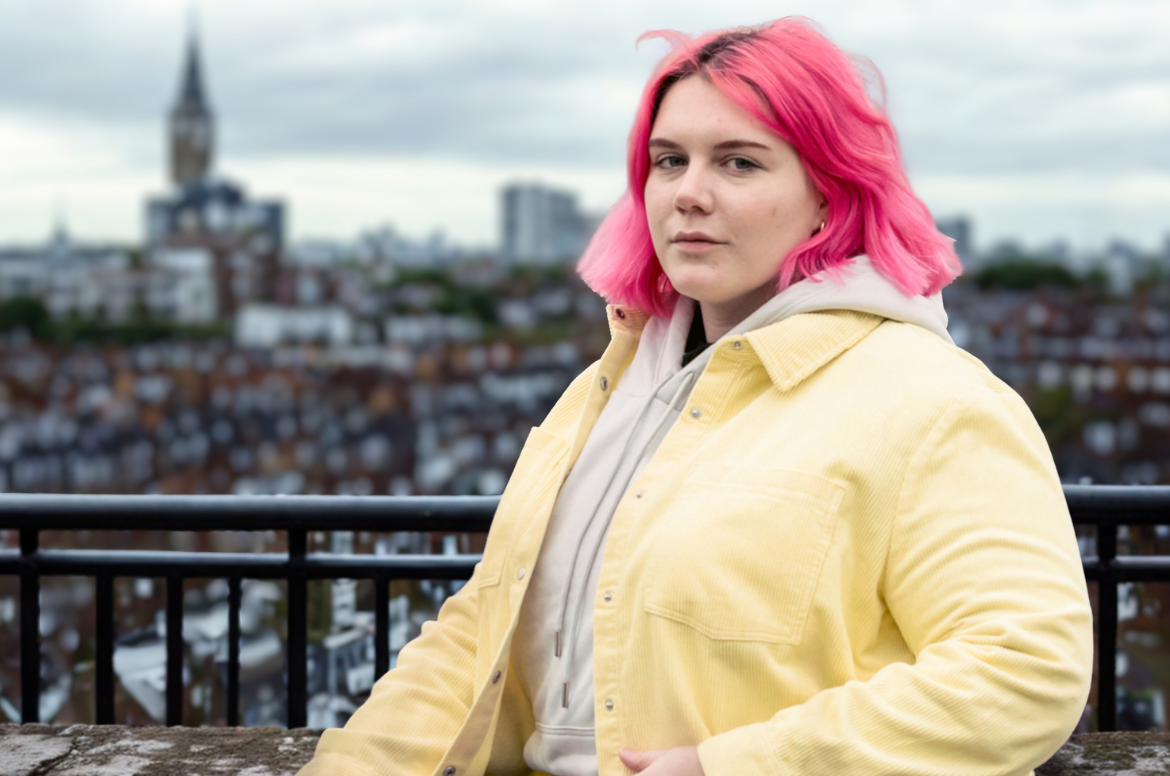
*Lexi’s name and photo are fictious as she wished to remain anonymous
Support for Young Adult Carers
Our Young Adult Carers Service (YAC) can offer free help and advice for those aged between 18 and 25 and caring for someone in Birmingham. Birmingham Carers Hub offers tailored support for Young Adult Carers, through YMCA Sutton Coldfield who provide help to reduce stress and isolation, and offer a variety of support to you in your caring role.
Find out more about this support or contact 0121 354 5614, email yac@birminghamcarershub.org.uk, visit their website, or register here.
Support for LGBTQ+ Carers
There’s a new group for LGBT Carers which is led by Neil, a gay man who cares for his dad and his brother while also juggling part time work. To join the group, please email neiljoesbury@gmail.com
LGBT Information and Wellbeing Session
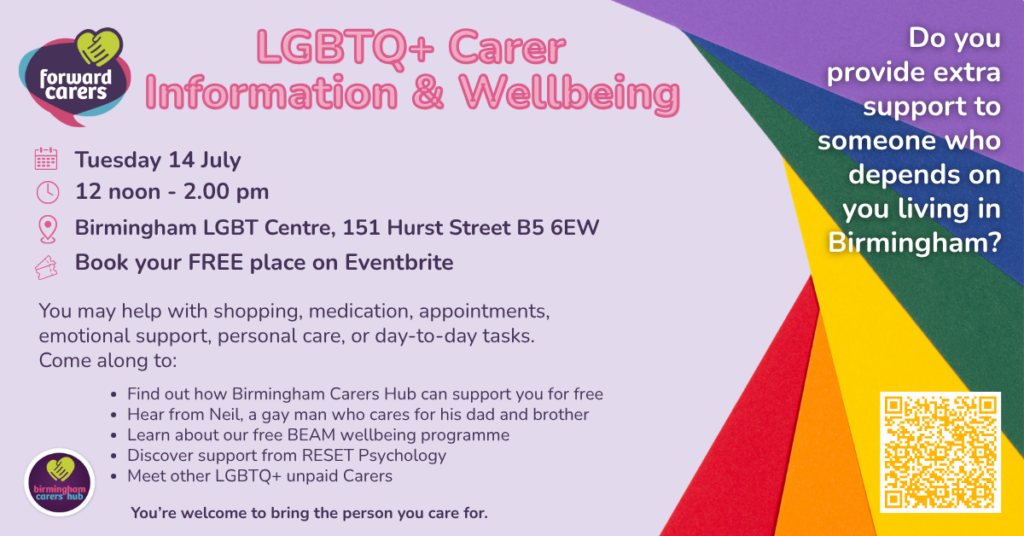
If you belong to the LGBT community in Birmingham and provide extra support to someone who relies on you, this event is for you!
Tuesday 14 July
12.00 noon – 2.00pm
Birmingham LGBT Centre, 151 Hurst Street, Birmingham B5 6EW
Book your free place on Eventbrite
Come along and:
- Find out how Birmingham Carers Hub can support you for free
- Hear from Neil, a gay man who cares for his dad and brother
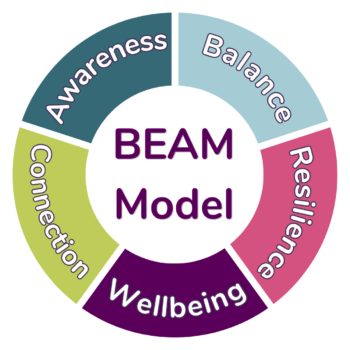
- Learn about our free BEAM wellbeing programme
- Discover support from RESET Psychology
- Meet other LGBTQ+ unpaid Carers
You are welcome to bring the person that you care for.
Places are limited so book your place today.