Black History Month: Honouring our Communities, The Legacy of Caring

This October, Forward Carers have been celebrating Black History Month through our theme ‘honouring our communities – the legacy of caring’.
A particular focus has been on highlighting the stories and messages from Black Carers across the UK about what the legacy of caring means to them and their community.
In this article, we hear from Monica, Health Liaison Project Manager at Forward Carers, and a former unpaid Carer.
She discusses her professional journey as a Black manager and some of the opportunities that Black History Month has provided for her to reflect on the legacy of caring.
From leadership development to making a difference
A key milestone in my early leadership development was completing the Possibilities Beyond Limits (PBL) leadership development programme by Birmingham Community Healthcare NHS Foundation Trust (BCHC).
The programme brought together people from health, voluntary, and community sector and gave me the opportunity to develop my confidence, leadership skills and professional networks.
Our group project focused on compassionate and inclusive leadership and improving the identification, recognition and support of NHS staff who are also unpaid Carers.

The learning from PBL has continued to influence how I approach my role as Health Liaison Manager at Forward Carers.
I work with health organisations to help identify and support unpaid Carers before they reach crisis point. This involves liaising with NHS Trusts, GP practices and other health and community organisations, as well as delivering Carer Champion Training to health professionals.
The aim is simple: to give professionals the confidence and knowledge to recognise someone who may be an unpaid Carer, start that conversation and connect them with appropriate support.
For me, this is also closely connected to tackling health inequalities.

We know that simply having a service available does not necessarily mean everyone will feel able or confident to access it.
We need to be visible within communities, listen to people’s experiences and understand the cultural, practical and personal factors that can influence whether someone seeks support.
Honouring our communities and the legacy of caring
That has made this year’s Black History Month focus, ‘honouring our communities – a legacy of caring,‘ particularly meaningful.
Caring is something that takes place every day within Black families and communities, yet people do not always describe themselves as a Carer.
They may simply see what they do as being a daughter, son, husband, wife, parent, sibling, friend or member of their community.
This is something I understand personally.
I have lived experience of caring for both of my parents, and I can relate to the challenges of caring while trying to balance other responsibilities.
I also understand the importance of maintaining and respecting cultural traditions and practices while caring for the people we love.
My experience has helped me recognise why conversations about caring need to be approached with respect and cultural understanding.
Identifying someone as a Carer should never take away from their relationship with the person they support.
Instead, it can open the door to recognising the contribution they make and ensuring they know that support is available for them too.
Listening to Black Carers
One of the most rewarding parts of our Black History Month activity has been creating opportunities to hear directly from Carers themselves.
I was excited to sit in front of Carers, listen to their stories and hear their reflections on the legacy of caring within their families and communities.
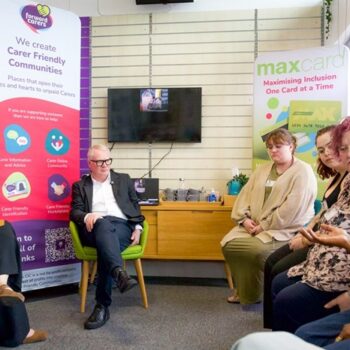
This included at our Black History Month Carers panel, extracts of which will be coming soon on our podcast Carer Friendly Conversations as well as across our social channels.
We also had a Black History Month drop-in, where Carers could enjoy conversations, African and Caribbean style refreshments, and gain advice from a variety of organisations.
Listening to these Carers gives us an opportunity not only to celebrate the strength, compassion and culture within our communities, but also to understand where challenges remain and what organisations like ours can do differently to make support more accessible and inclusive.
Black History Month provides an important platform for these conversations, but listening to Carers and acting on what they tell us needs to continue throughout the year.
I also had the joy of attending the 0121 Jamaica Festival in Birmingham this August.
It was a fantastic opportunity to be present within the community, speak with people about unpaid caring and raise awareness of the support available.

Community events can reach people who may never attend a formal information session or contact a Carer service themselves. Sometimes a friendly conversation at an event can be the first time someone stops and thinks they actually are a Carer.
I would love to see us attending even more events like this because reaching people in places where they already feel comfortable and connected is an important part of early intervention.
Building a legacy of recognition and support
When I reflect on my journey, from completing the PBL leadership programme to developing my role in health liaison, delivering Carer Champion Training and engaging directly with our communities, I can see how each experience has shaped the way I work today.
There is still more to do.
I want to continue building relationships with health and community organisations, reaching communities where Carers may be less likely to identify themselves.
I want to continue raising awareness of health inequalities and creating opportunities for Carers’ voices to influence the services intended to support them.
For me, honouring our communities means recognising the legacy of care that already exists within them.
It means celebrating the people who quietly support parents, partners, children, relatives and friends every day.
It means respecting the culture, traditions and relationships that shape people’s caring experiences.
And it means making sure that while Carers continue to care for the people they love, someone is also looking out for them.
This Black History Month, I celebrate our Black Carers – their voices, their culture, their contribution and their legacy of caring.